Written by Business Moving Group - Southern California's Commercial Moving Experts.
In the world of commercial real estate, access is everything. You may have a signed lease, a packed office, and a fleet of trucks ready to go-but if your moving company cannot produce a valid Certificate of Insurance (COI), the freight elevator doors will remain locked. For Facility Managers in Los Angeles and Orange County, the COI is not just paperwork; it is the passport that allows a move to happen.
Property management firms in Southern California (such as Irvine Company, Brookfield, or CBRE) maintain strict risk management protocols. They require proof that your mover can cover damages to their building-scratched marble, dented elevators, or worker injuries. At Business Moving Group, we specialize in navigating these compliance hurdles proactively to ensure zero delays on move day.
1. What is a Certificate of Insurance (COI)?
A COI is a formal document issued by an insurance broker that verifies the existence of an insurance policy and summarizes the coverage conditions. It proves to your landlord that the moving company has the financial backing to repair any damage caused during the relocation.
It typically validates three critical areas of coverage:
- General Liability: Covers property damage and bodily injury to third parties (e.g., if a mover drops a crate and cracks the lobby floor).
- Workers' Compensation: Critical in California. It covers medical costs if a mover is injured on the property, protecting the building owner and your company from lawsuits.
- Auto Liability: Covers damage caused by the moving trucks while on the premises or loading dock.
2. The "Additional Insured" Endorsement
This is the most common point of confusion. Building managers do not just want to know we are insured; they want to be included in the policy for the duration of the move.
The Endorsement Language
Property managers will request specific language to be added to the COI, listing the building owner, the management company, and the asset manager as "Additional Insured." This extends our coverage to them. We handle this customization directly with our broker at no extra cost to you.
3. Why Class A Buildings Have Higher Standards
If you are moving into a premium high-rise in Downtown LA or Century City, standard insurance limits are often insufficient. Many "budget" movers carry only the state minimums (e.g., $1 million aggregate).
The BMG Standard: We carry higher liability limits and Umbrella Policies specifically designed to meet the requirements of Class A and B commercial properties. This ensures that even if a building requires $2 million or $5 million in aggregate coverage, we are compliant.
Learn more about the hidden costs of non-compliance in our Budgeting Guide.
4. The Timeline: When to Request the COI
Waiting until the day before the move to request a COI is a recipe for disaster. Insurance brokers operate during business hours, while many moves happen on weekends.
The Protocol:
- 2 Weeks Out: Request the "Sample COI" or "Vendor Insurance Requirements" PDF from both your current and new building managers.
- 1 Week Out: Forward these requirements to your Business Moving Group Project Manager. We will generate the certificates.
- 3 Days Out: We submit the final COI to building management for approval. This buffer allows time for any minor corrections to names or addresses without jeopardizing the move schedule.
5. Protection Beyond the Paperwork
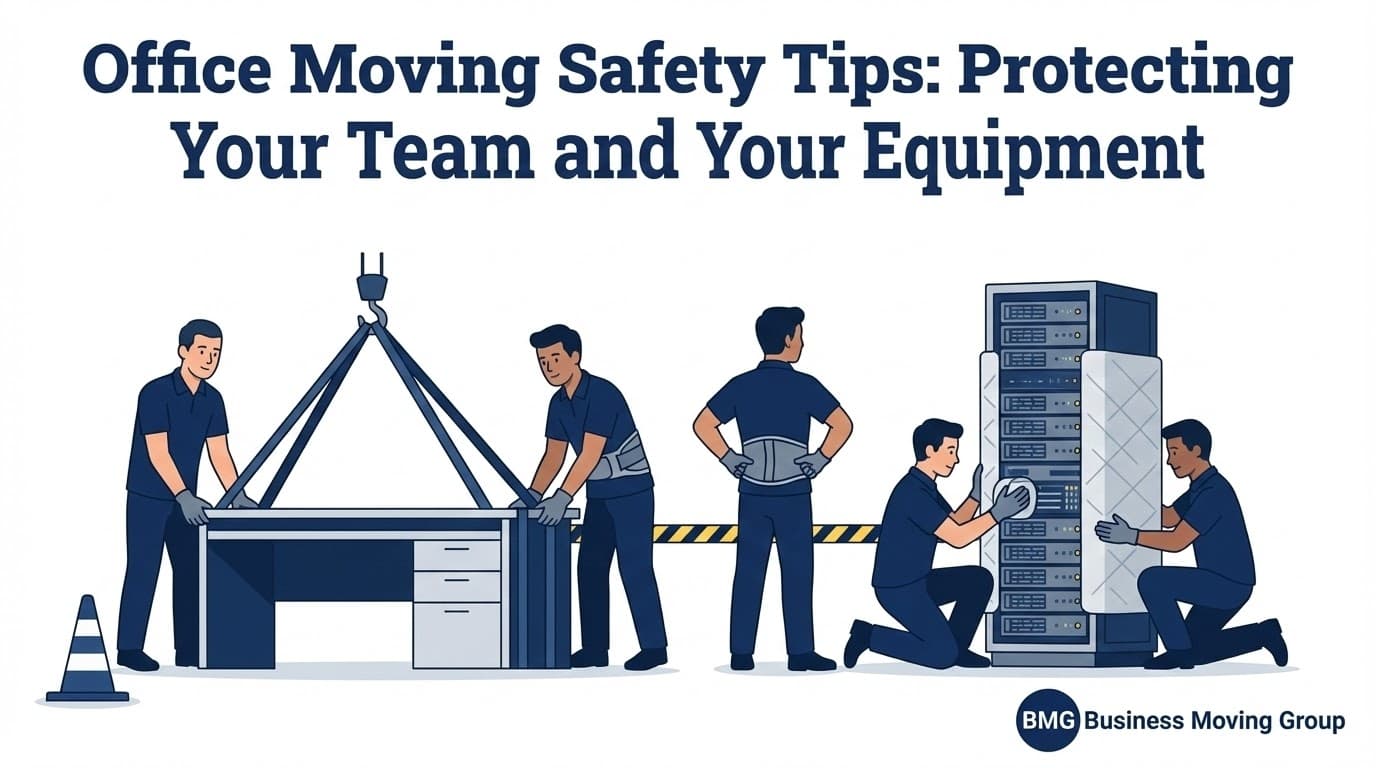
A COI is a promise to pay for damages, but our goal is to prevent them entirely. Insurance compliance goes hand-in-hand with physical site protection.
- Masonite Flooring: We layout hardboard protection in all main thoroughfares to prevent wheel rutting.
- Corner Guards: We install protection on door jambs and drywall corners.
- Elevator Skins: We pad the interior of freight cabs to prevent scratches to stainless steel finishes.
View our full Safety & Protection Checklist.
Summary: Don't Get Turned Away at the Dock
The difference between a professional commercial mover and a "man with a van" is often the Certificate of Insurance. Hiring a mover who cannot produce a valid COI exposes your company to massive liability and the risk of being denied entry to your own office.
| Risk Factor | Unlicensed Mover | Business Moving Group |
|---|---|---|
| Building Access | Risk of Denial | Guaranteed Entry (Pre-Approved) |
| Liability Limits | State Minimum ($750k-$1M) | High Limits + Umbrella Policy |
| Workers' Comp | Often Waived/Missing | Fully Compliant Coverage |