Written by Business Moving Group — Southern California’s Commercial Moving Experts.
In Southern California, sustainability is no longer optional—it is a business imperative. During an office relocation or renovation, businesses often find themselves saddled with surplus assets: outdated cubicles, task chairs, and filing cabinets. The traditional "dumpster approach" is not only environmentally irresponsible; it is increasingly expensive due to rising landfill tipping fees and strict local waste regulations.
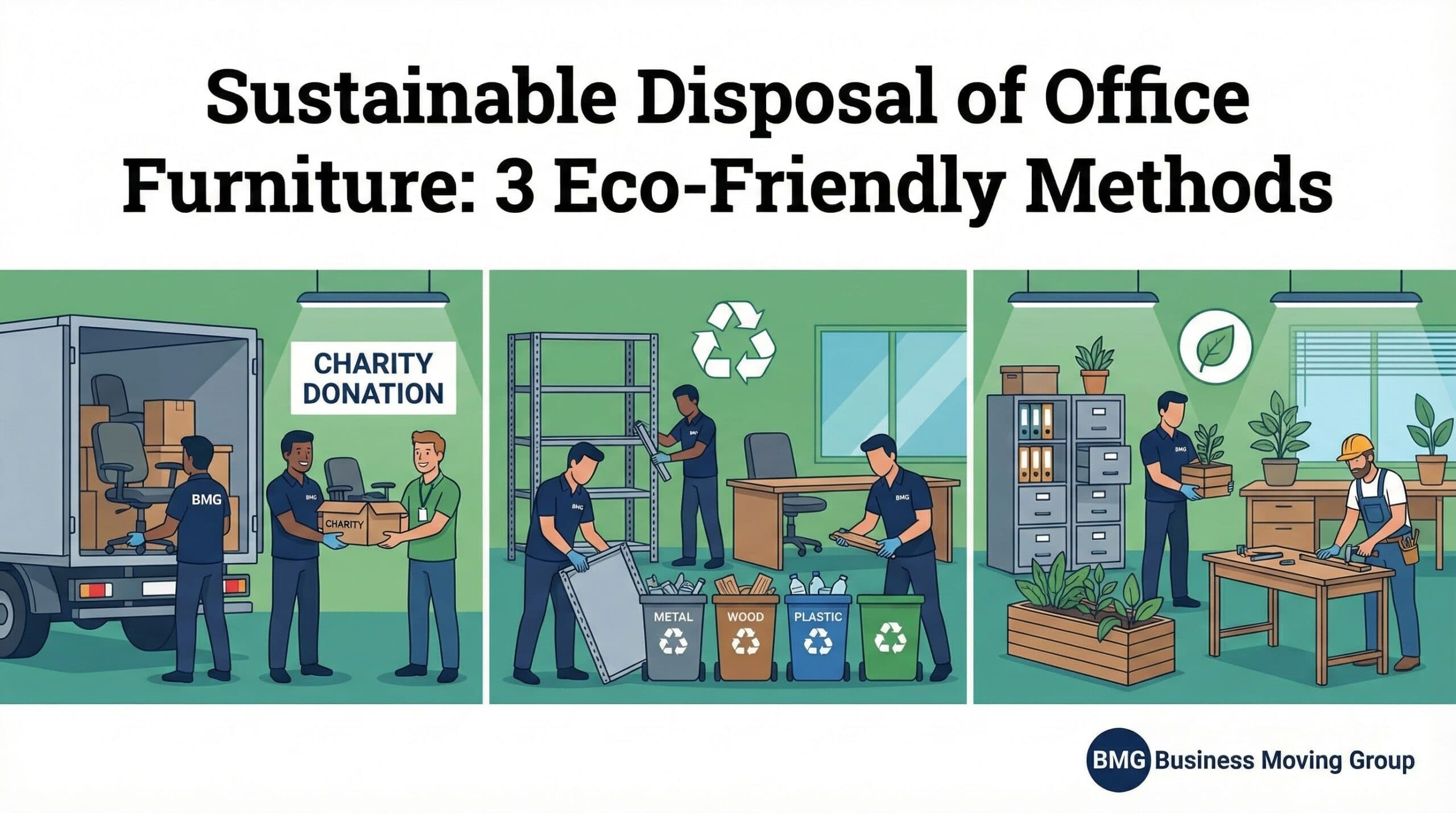
At Business Moving Group, we integrate sustainable decommissioning into our relocation strategy. We believe your exit should be as clean as your entrance. This guide outlines three sustainable methods for handling unwanted office furniture, turning potential waste into recoverable value or community support.
1. Asset Recovery: Resell High-Value Inventory
Before you pay to dispose of furniture, determine if it has residual value. High-quality modular systems from manufacturers like Herman Miller, Steelcase, and Haworth often retain value on the secondary market.
The Resale Strategy:
- Inventory Audit: Create a detailed manifest of surplus items, noting brand, model year, and condition.
- Targeted Buyers: We can help connect you with used office furniture brokers or liquidators who buy in bulk.
- Employee Sales: Offering a "fire sale" to employees for their home offices is a popular way to clear inventory quickly while boosting morale.
Read our guide on handling unwanted furniture.
2. Corporate Social Responsibility: The Donation Route
If your furniture is functional but lacks resale value, donation is the most impactful option. It extends the lifecycle of the product and supports local Southern California non-profits.
The Logistics of Giving
Donation requires coordination. Charities have limited warehouse space and specific acceptance criteria. We manage the logistics—identifying the right recipients (schools, shelters, non-profits), transporting the goods, and obtaining the necessary documentation for your potential tax deduction.
3. Zero Landfill: Responsible Recycling
For end-of-life assets that cannot be reused, recycling is the final line of defense. Simply crushing a chair into a landfill is wasteful. Office furniture is a complex assembly of metals, plastics, and fabrics that must be separated.
The BMG Recycling Protocol:
- Metal Separation: Steel filing cabinets and cubicle frames are stripped and sent to metal scrappers.
- E-Waste Compliance: Electronic components found in powered desks or IT rooms are processed according to California's strict e-waste regulations.
- Documentation: For LEED-certified projects or corporate ESG reporting, we can provide weight tickets verifying the diversion of materials from landfills.
Download our Office Decommissioning Guide.
Understanding Local Regulations
California leads the nation in environmental regulation. Local municipalities often have specific mandates regarding commercial waste disposal. Ignorance of these rules can lead to fines. By partnering with a professional decommissioning service, you ensure that your disposal methods are compliant with local laws.
Summary: The Green Exit
Choosing to resell, donate, or recycle is a commitment to a greener future. It reduces your carbon footprint and reinforces your company’s reputation as a responsible corporate citizen. At Business Moving Group, our decommissioning services are designed to achieve zero-waste goals while minimizing disruption to your move.